
 英语
英语0086 574 87739122

 By: Ethan
Beverage Packaging · Buyer's Field Note
Compostable labels are easy to print. Condensation is harder to ignore. This guide separates material claims from real-world cold drink performance, so your next order survives the first twenty minutes of service.
A beverage operator recently replaced its cold cup line after a supplier said the word "eco friendly" eleven times in one meeting. Three weeks later, baristas were double-cupping every iced latte because the new cups softened after eight minutes of condensation. The extra cups consumed more material than the old design.
The takeaway is simple: an eco friendly cup for cold drinks is only sustainable if it survives the conditions it was made for. Material choice matters, but only after the cup proves it can handle the drink.
Eco friendliness is not a single property. It spans three phases: where the material comes from, how the cup performs during service, and where it goes afterward. For cold drinks, the second phase is the easiest to underestimate, since the drink works against the packaging from the moment it is poured.
A cold drink cup lives under steady stress: liquid near freezing, ice against the walls, condensation forming outside, and a serving period that often runs twenty to forty minutes. The cup must stay rigid while wet, stay clear enough to see the product, hold a lid without leaking, and stack cleanly in storage.
| Material | Cold drink behavior | Clarity | End-of-life profile | Typical fit |
|---|---|---|---|---|
| PLA | Rigid at cold temperatures; unsuitable for hot liquids | Good, occasional slight haze | Compostable under industrial conditions; needs correct sorting | Iced coffee, cold juice, event service |
| PP | Excellent cold durability and dimensional stability | Clear or frosted options | Recyclable; supports reusable wash systems | Cafés with reuse programs, delivery lines |
| PET / rPET | Strong and stable at cold temperatures | Excellent transparency | Recyclable; rPET lowers virgin resin demand | Retail cold drinks, premium display |
| Paper + PLA liner | Good for shorter service; softens as condensation builds | Opaque, strong print surface | PLA liner compostable in theory; PE liner is not | Takeaway drinks, branded quick service |
None of these materials is universally right. The correct choice depends on your drink, your service model, and the waste infrastructure your customers can actually access.
Put any cold drink in a room-temperature space and water vapor condenses on the outside wall. Paper fibers wick that moisture, which is why paper cold cups need an internal lining. If the lining is polyethylene, the cup will not be compostable in practice. If it is PLA, compostability improves, but the cup still loses stiffness faster than a polymer cup.
A cup that softens after twenty minutes is not eco friendly. It is simply waste that has not finished happening yet.
Plastic cups do not soften the same way. PET and PP stay dimensionally stable when wet, which is why they dominate demanding cold drink service. With a polymer cup, the question shifts from "what is it made of" to "what was it made from and where does it go next." Recycled content, recyclability, and reuse loops matter more than the material name on the side.
Once the material direction is clear, the next decision is volume. Cold drink cups are typically ordered in 10 oz, 12 oz, 14 oz, and 16 oz sizes, with 12 oz as the standard for iced coffee. The 12 oz format balances portion control, lid compatibility, and inventory simplicity for most beverage programs.
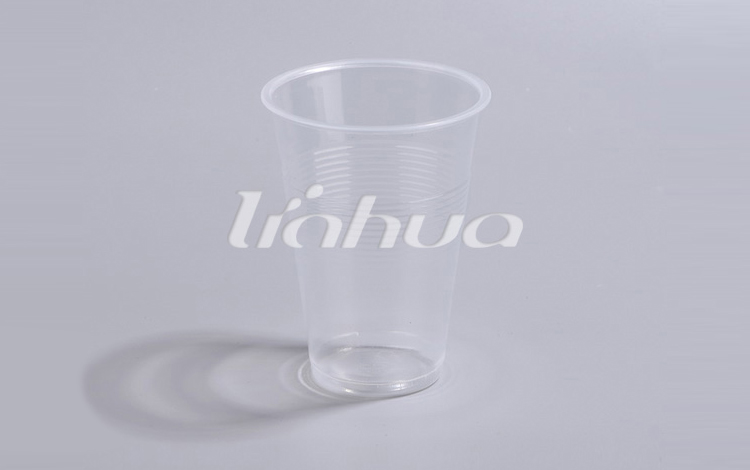 12 oz Disposable Cold Drink Cup for Standard Iced BeveragesThe 12 oz size is a practical standard for iced coffee, balancing portion control, lid compatibility, and inventory simplicity. Thermoformed from PP, PS, or PET, these cups can be transparent or colored to fit your program.View Product →
The 16 oz size covers large iced coffees, frappes, and drinks where customers expect a generous portion. Because the cup is bigger, wall rigidity and lid retention matter even more: a tall cup carries more weight and gets squeezed harder in delivery.
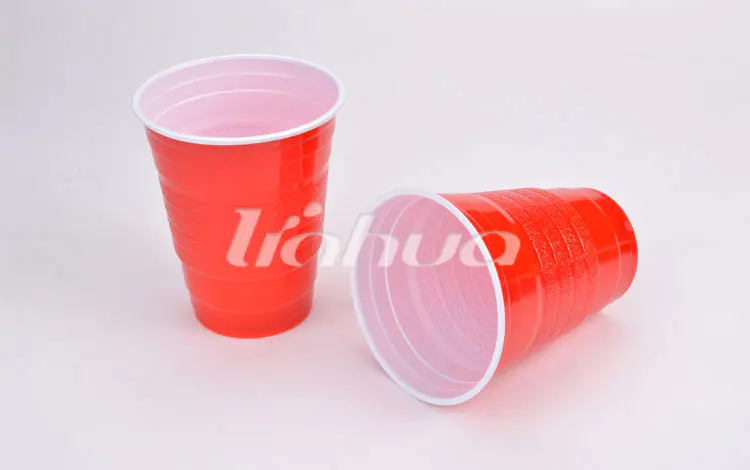 16 oz Custom Disposable Red Plastic Cup for Large DrinksThis larger 16 oz cup suits generous iced coffees and frappes, where wall rigidity and lid retention matter under squeezing. It is made from PP material, noted as more environmentally friendly than typical PS dual-color cups.View Product →
Smaller formats such as 3 oz, 5 oz, and 7 oz cups cover samples, tasting portions, and condiments.
A cold cup does not ship alone. It ships with a lid, and the lid is where most leaks start. A flat lid works for standard cold drinks and straws. An arch-form or domed lid gives headspace for whipped cream, fruit toppings, or bubble tea pearls. The lid and the cup need to be tested as a system, not as two unrelated items.
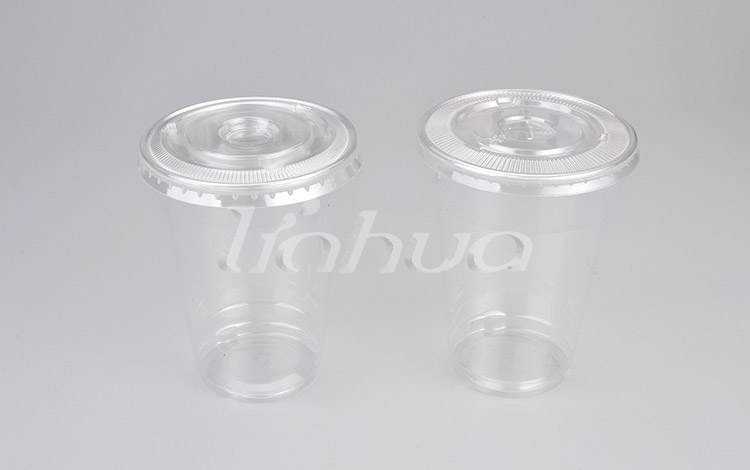 84mm PET Flat Lid for Cold Cups and StrawsThis flat lid fits standard cold drinks and straws, and pairing it with the correct cup rim geometry helps prevent leaks and reduce waste. Available in PET, with PP options for a nearly seamless, no-leak seal.View Product →
For sustainability, the lid matters as much as the cup. A leaky lid turns a walk into a napkin-consuming event, and a cup that cannot be sealed properly gets thrown away early. Choosing lids that match your cup's rim geometry is one of the simplest waste-reduction decisions a beverage program can make.
Eco friendly claims become meaningful only when they survive verification. A short checklist prevents most of the problems that appear once a cup reaches your warehouse.
| Check | Why it matters |
|---|---|
| Certification documents | Confirm the material claim and that the document covers your SKU and manufacturing site |
| Temperature and duration data | Proves the cup handles cold service without softening or leaking |
| Lid fit and drop results | Avoids leaks in customer hands and in delivery |
| Print and decoration compatibility | Branding should not weaken the wall or complicate recycling |
| Stackability and storage behavior | Affects transport cost, shelf display, and daily handling speed |
For a deeper look at supplier auditing, our guide on how to choose a qualified disposable plastic cup covers the full due-diligence process, from factory visits to batch acceptance.
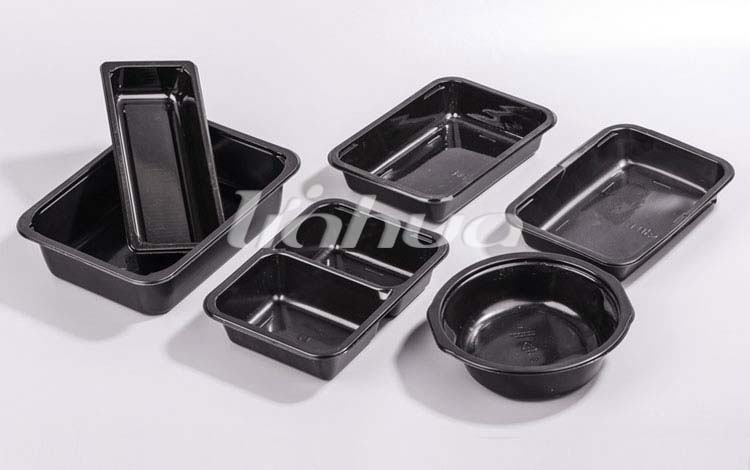
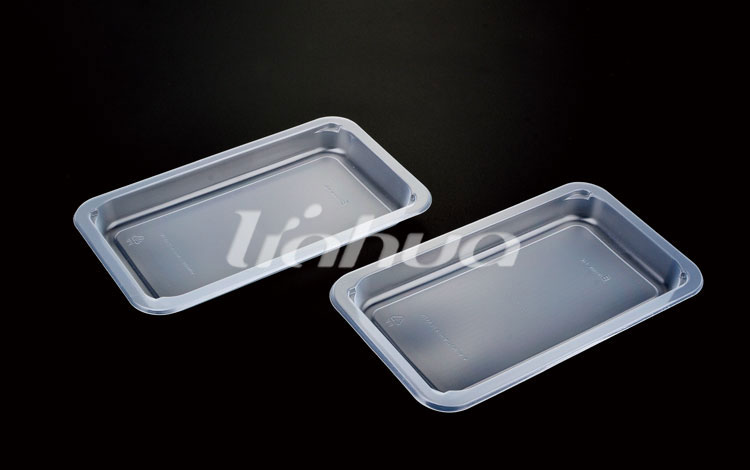
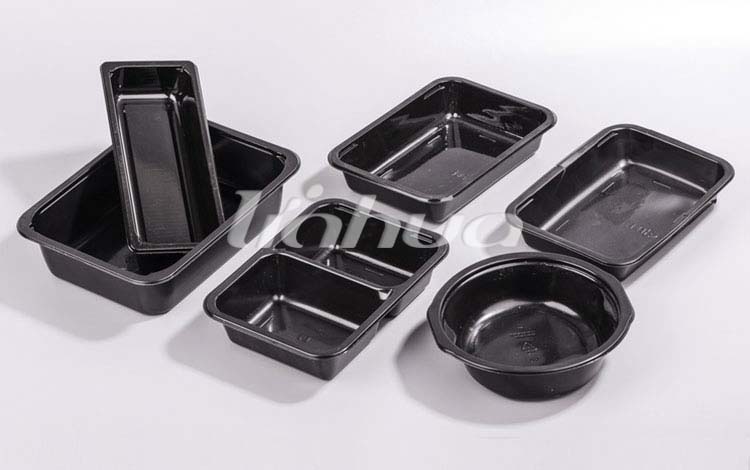
Cups are rarely the only packaging a beverage business needs. The same brand orders portion cups for sauces, lids, and trays or containers for food sold alongside drinks. When these components come from one coordinated packaging line, the risk of rim mismatches, lid leaks, and inconsistent branding drops sharply.
A supplier with experience across a full packaging line can also flag problems during development instead of after delivery. Questions like "does this lid work with that rim profile?" are easier to answer when the same team has tested the cup, its lid, and the tray beside it.
The trade-off between convenience and environmental impact appears everywhere in food service, and our look at airline plastic cups shows how different service models solve it.
Approach eco friendly cups for cold drinks with three questions. Will the cup hold your drink under real serving conditions? Can the material claim be verified for your exact order? Does the cup, the lid, and your disposal infrastructure actually reduce waste? When the answers are yes, the cup is eco friendly in the only sense that matters for your business.
Materials, sizes, lids, and supplier checks all play a role, but none replaces the basic test: a cold drink, a long conversation, and a cup that stays solid until the last sip is gone.
Food-service packaging · Buyer's guide Small Containers, Big Stakes: Choosing Little Sauce Containe...
Beverage Packaging · Buyer's Field Note Eco Friendly Cups for Cold Drinks: What Buyers Should Actua...

0086 574 87739122
Copyright © Ningbo Linhua Plastic Co.,Ltd. All Rights Reserved.
Disposable Food Packaging Tray Manufacturers


Post Comment