
 英语
英语0086 574 87739122

 By: Ethan
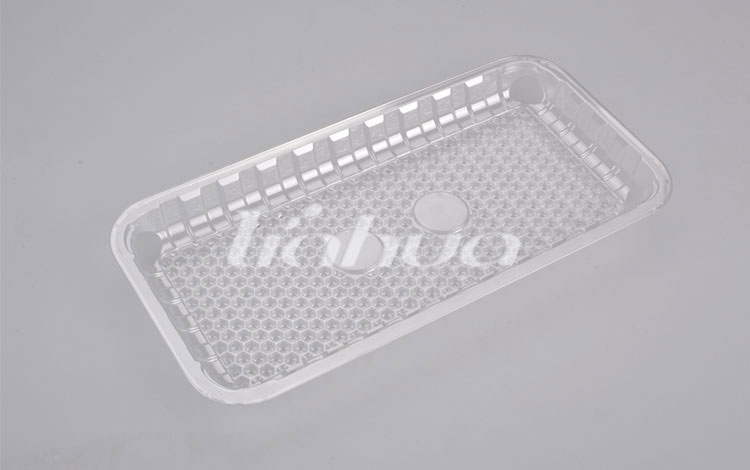
When it comes to Modified Atmosphere Packaging (MAP), sealing performance is not a minor detail — it is the defining factor between a product that stays fresh for 12 days and one that spoils in four. The short answer: CPET food trays offer comparable, and in several practical scenarios superior, sealing performance to aluminum trays for MAP applications, particularly when heat-seal lidding films are used. However, the two materials differ meaningfully in gas barrier properties, seal consistency, tray rigidity, and compatibility with automated sealing lines. Understanding these differences helps food manufacturers, retailers, and packaging engineers choose the right solution for their specific product category, food tray size, and throughput requirements.
Modified Atmosphere Packaging replaces the air inside a sealed package with a controlled gas mixture — typically a combination of CO₂, N₂, and O₂ — tailored to inhibit microbial growth and slow oxidation. For red meat, a typical MAP gas mix is 70% O₂ and 30% CO₂ to preserve color and freshness. For cooked poultry or ready meals, a mix of 30% CO₂ and 70% N₂ is common.
The entire MAP process only works if the seal between the tray and the lidding film is hermetic. Even a micro-leak of less than 0.1 mm can cause gas exchange that renders the MAP ineffective within 24–48 hours. This is why seal integrity — measured by burst pressure, peel force, and leak detection — is a primary selection criterion when comparing CPET food trays to aluminum trays in MAP environments.
CPET (Crystallized Polyethylene Terephthalate) food trays are sealed using heat-seal lidding films — typically multilayer PET-based films with a peelable or non-peelable sealant layer. The sealing process applies heat (typically 160–200°C), pressure (2–6 bar), and dwell time (0.5–2 seconds) to bond the film to the tray flange.
Aluminum trays, by contrast, can be sealed with both heat-seal films and cold-seal adhesives. Aluminum's thermal conductivity means heat distributes rapidly across the flange, which can be advantageous for speed but requires careful calibration to prevent overheating thin flanges. Aluminum trays also allow for mechanical crimping in some applications, a sealing method not available for CPET.
The flange geometry of the food tray plate is critical in both cases. A flat, uniform flange of at least 4–6 mm width is required for consistent seal formation. CPET trays, being injection or thermoformed, can achieve very tight dimensional tolerances on the flange — typically ±0.2 mm — which directly supports seal consistency across high-speed MAP lines.
Gas barrier is where the two materials diverge most significantly. Aluminum is inherently impermeable to oxygen, carbon dioxide, moisture, and light. An aluminum tray alone provides a zero oxygen transmission rate (OTR), making it an excellent passive barrier without any additional coating.
Standard CPET food trays, however, have an OTR of approximately 5–20 cc/m²/day/atm, depending on wall thickness and crystallinity level. For many ready meal and ambient applications, this is acceptable — especially when a high-barrier lidding film (with EVOH or SiOx coating, OTR <1 cc/m²/day) is used to compensate. But for oxygen-sensitive products such as raw red meat or premium charcuterie, the tray body itself may require additional barrier enhancement, such as EVOH co-extrusion or SiOx plasma coating, which adds cost.
| Property | CPET Food Trays | Aluminum Trays |
|---|---|---|
| OTR (tray body) | 5–20 cc/m²/day/atm | ~0 (impermeable) |
| Moisture Vapor Transmission | Low | Zero |
| Seal Flange Tolerance | ±0.2 mm | ±0.3–0.5 mm |
| Seal Method Compatibility | Heat-seal film only | Heat-seal, cold-seal, crimp |
| Typical Burst Pressure | 180–300 mbar | 150–280 mbar |
| Microwave Compatible | Yes | No |
| Dual-Ovenable | Yes (up to 220°C) | Conventional oven only |
Seal integrity for MAP packaging is typically evaluated through three standard methods:
One area where aluminum trays have historically had an edge is resistance to flange deformation during transport before sealing. However, modern CPET food tray designs with reinforced flange geometry largely eliminate this concern, particularly for standard food tray size formats used in retail ready-meal lines.
Both tray types are compatible with standard tray sealing machines used in MAP environments — including Mondini, Sealpac, and Ishida platforms — but their behavior on the line differs.
CPET food trays offer several line efficiency advantages:
Aluminum trays, while flexible in sealing method, can be more prone to flange warping if pre-formed trays are stored improperly before use, which may increase seal defect rates on high-speed lines running at 20–30 cycles per minute.
The food tray plate surface inside CPET trays also benefits from non-stick characteristics when treated, making post-seal handling easier during downstream labeling, inspection, and secondary packaging.
The choice between CPET and aluminum trays is also influenced by food tray size and the nature of the product being packed. CPET food trays are available in a wide range of standardized and custom dimensions, from small single-portion trays (e.g., 136 × 114 mm) to large family-size formats (e.g., 340 × 240 mm). Their thermoforming process allows for complex internal geometries — compartments, ribs, sloped bases — while maintaining a uniform flange suitable for MAP sealing.
Aluminum trays, though also available in many sizes, are less easily tooled for complex internal geometries without increasing cost. For large-volume, standardized food tray size formats such as those used in airline catering or hospital meal services, CPET trays often offer a better cost-to-performance ratio when MAP sealing is required alongside oven heating.
From a sustainability standpoint, CPET food trays are recyclable within PET streams, increasingly accepted at curbside in the UK, EU, and parts of North America. Aluminum is also highly recyclable, with a well-established global collection infrastructure. However, the energy required to produce virgin aluminum is approximately 14 times higher than that for virgin PET, giving CPET a lower carbon footprint in primary production scenarios.
Both materials comply with major food contact regulations including EU Regulation 10/2011, FDA 21 CFR, and UK Food Contact Materials Regulations. When selecting CPET food trays for MAP, manufacturers should confirm that the specific resin and any coatings or additives are compliant with the intended food type and temperature conditions.
Based on sealing performance, line compatibility, and end-use requirements, CPET food trays are the stronger choice for MAP when:
Aluminum trays remain the preferred choice when absolute zero-OTR tray body barrier is non-negotiable, when mechanical crimping is part of the sealing process, or when regulatory or customer requirements specifically mandate metal packaging — for example, in certain export markets or premium gifting formats.
CPET food trays deliver robust, reliable MAP sealing performance that matches or exceeds aluminum in most ready-meal and fresh food applications — while offering the added advantages of dual-ovenable compatibility, tighter dimensional tolerances, and a more sustainable material profile. For packaging engineers evaluating MAP line upgrades or new product formats, CPET deserves serious consideration as the primary tray substrate.
.jpg?imageView2/2/w/600/h/600/format/webp/q/75)
Materials & Packaging Science Is a PET Tray Made from Recycled Material, Virgin Plastic, or a B...
.jpg?imageView2/2/w/600/h/600/format/webp/q/75)
A Plastic Food Tray made from PET (Polyethylene Terephthalate) offers superior moisture resistance ...

0086 574 87739122
Copyright © Ningbo Linhua Plastic Co.,Ltd. All Rights Reserved.
Disposable Food Packaging Tray Manufacturers


Post Comment