
 英语
英语0086 574 87739122

 By: Ethan
Every morning, a catering kitchen portions thirty liters of house-made chipotle into little sauce containers, snaps on the lids, and sends the batch to a deli counter across town. Nothing about the container feels important until one of them weeps oil onto a paper bag. For food-service operators, little sauce containers are not a commodity purchase. They are a cost-control tool, a food-safety checkpoint, and the last container a customer touches before eating.
Start from the practical side: a container that keeps its shape, seals cleanly, and tolerates the temperature range it will actually meet saves more money over a year than the few cents gained by switching to a cheaper alternative. The reason is operational, not sentimental.
When every portion holds the same volume, recipes and food costs become predictable. When lids fit without cracking, staff stop re-wrapping trays. When cups stack cleanly, refrigerators and delivery bins hold more. Each saving is small; together, they decide how profitable a sauce program really is.
None of this should be taken on faith. We have broken down how portion cups contribute to portion control and cost management, and the pattern is consistent: the container design either supports the process or quietly undermines it.
There is no universal little sauce container, because sauce duties differ across a menu. The right format matches the serving intention: a quick dip, a side portion, or a family-style helping.
| Format | Typical Serving | Material Fit | What to Watch For |
|---|---|---|---|
| 1.5–2 oz | Tasting portions, sample cups, side dips | PP or PET | Lid seal matters most at this size. |
| 3 oz | Dipping sauces, dressings, marinades | PP | Confirm the hot-fill range before you fill. |
| 5 oz bowl | Side sauces, fruit, small side dishes | PP or PET | A wide opening is easier to fill and eat from. |
| 8 oz | Family-style dips, shared condiments | PET or PP | Clarity and stacking matter at retail display. |
Three-ounce cups are the workhorse of most sauce programs: generous enough for a real dip, small enough to keep portion cost in line. When the menu calls for more, a five-ounce bowl with a wide opening is easier to fill and easier for customers to use. For tasting menus or sampling campaigns, smaller formats keep the first impression tight. And when cups within one product family share a lid spec, you order fewer SKUs and simplify the whole storage system.
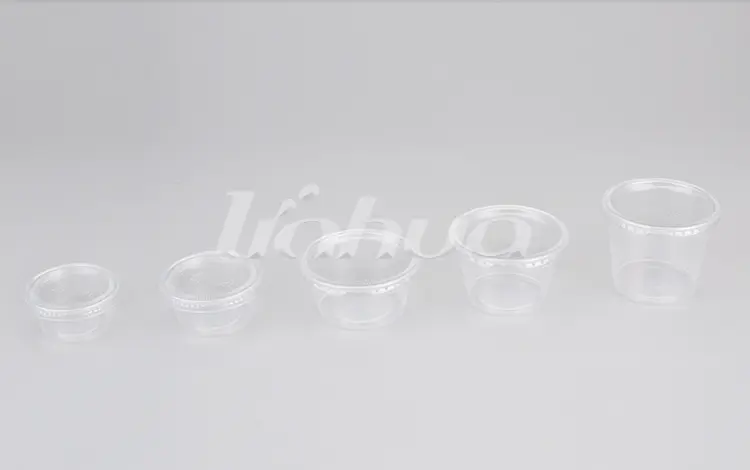 Clear PP Portion Cups from 1.5 to 5.5 oz with PET LidsThis cup family spans multiple sizes with a shared lid spec, simplifying inventory. Transparent PP suits hot filling and microwave use, while PET lids fit two size groups. Worth reviewing when standardizing sauce packaging.View Product →
Material selection is where temperature requirements meet appearance. Polypropylene handles hot filling, microwave reheating, and freezing without becoming brittle, which is why it dominates commercial sauce packaging. PET gives the clarity that makes sauces look more attractive on a shelf or a buffet line. Polystyrene is economical but less tolerant of heat. PLA, a plant-based option, works for cold programs where a compostable claim matters more than temperature performance.
What buyers often miss is the difference between a material's theoretical limits and the behavior of a specific container. A cup stamped "microwave-safe" can still flex in the hand when the wall is thin. The practical test is simple: fill the container with the hottest sauce your kitchen produces, let it sit for ten minutes, and check whether it holds its shape and its seal.
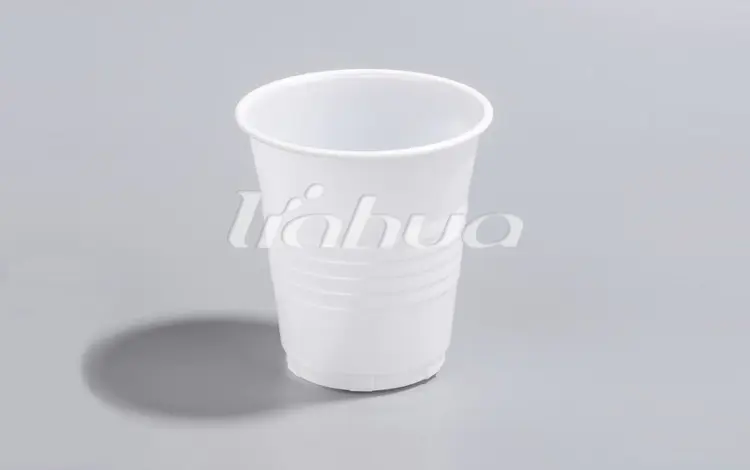 3oz Thermoformed Plastic Cup in PP, PS, or PETA compact 3oz cup that addresses practical sealing and heat tolerance. Offered in PP, PS, or PET with transparent or colored options, it is relevant when testing containers against hot sauces and delivery needs.View Product →
The lid is half the container. A flat lid that snaps on evenly is enough for most cold sauces. An arch-form lid adds dome height for chunky toppings. When the order has to travel — delivery, catering, takeout — the sealing system matters more than the cup itself. Heat-seal film gives the strongest barrier; a well-designed locking lid provides the convenience kitchens need all day long.
A sauce container that leaks in transit is never just about the sauce. It is food safety, labor, packaging waste, and a customer who no longer trusts the brand.
The message for buyers is to test with the actual sauce you plan to serve. Oil finds the weakest point faster than water, and thick dressings behave differently from thin vinaigrettes. We tested how leakproof portion cups really are with liquids like sauces and dressings, and the results explain why the cheapest cup often becomes the most expensive one after rework, claims, and lost orders.
Buying in volume changes the question from "does it work today" to "does it work for every batch, every shift, every month." The checklist below separates suppliers who think about your packaging line from those who simply sell boxes.
A supplier with manufacturing depth — in-house tooling, material selection, packaging-line experience — can identify problems before you do. That is especially valuable when a menu change needs a new size, a different material, or a custom color, because the conversation starts from actual production capability rather than a catalog photo.
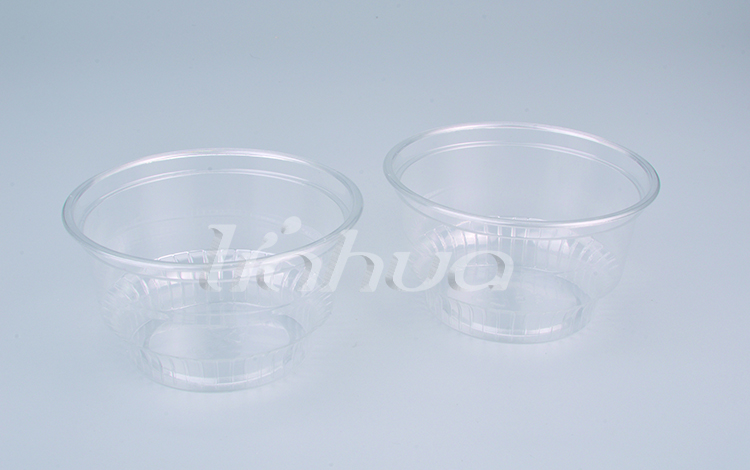 5 oz Disposable Bowl from a Food-Grade Packaging ProducerA 5 oz bowl positioned for broader sauce or side portions. Its value lies in the manufacturing background—in-house tooling and quality control—which matters when custom sizes, materials, or colors are required.View Product →
A little sauce container exposes a factory's discipline. Wall thickness, edge finish, lid fit, and the consistency of each production run are direct results of tooling precision and quality control. Manufacturers that have spent years in food-contact packaging build their production lines around those requirements, so the small details are handled before the product reaches the buyer.
This is why experience shows up in small containers. A mold designed for uniform wall thickness produces cups that freeze, microwave, and stack predictably. A plant operating under documented food-safety systems — HACCP, GMP, and third-party audits such as BRC — produces packaging that meets the standards your customers assume are already in place.
Little sauce containers look like an afterthought on a packing list. In practice, they carry the sauce, the portion cost, and the customer's trust in your brand. Choose the size for the serving, the material for the temperature, and the supplier for the quality system behind the price. Get those three right, and the smallest package on your line becomes one of the most reliable.
Food-service packaging · Buyer's guide Small Containers, Big Stakes: Choosing Little Sauce Containe...
Beverage Packaging · Buyer's Field Note Eco Friendly Cups for Cold Drinks: What Buyers Should Actua...

0086 574 87739122
Copyright © Ningbo Linhua Plastic Co.,Ltd. All Rights Reserved.
Disposable Food Packaging Tray Manufacturers


Post Comment