
 英语
0086 574 87739122

 By: Ethan
Polylactic acid can turn field corn into a cup, tray or deli container, but the material only works when heat, shelf life and composting infrastructure are treated as design inputs.
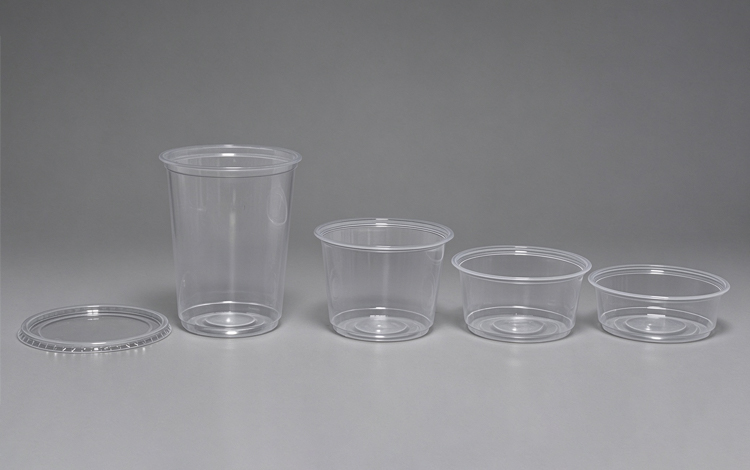
Two cold cups can look identical on a sample table. One is PP, one is PLA. The conclusion comes first: corn can become a plastic that performs in food service, but it is not a drop-in substitute for every PET or PP part. PLA earns its place in cold, short-life and dry-ish applications. It loses when the line needs heat, a long barrier or a landfill-only end-of-life. The difference sits in the molecule and the waste system, not in the word “corn.”
For packaging buyers, that distinction changes how a specification should be written. Ask for the resin grade, heat-deflection data, a food-contact declaration and a certification number before accepting a “corn plastic” sample.
Corn into plastic is a fermentation route, not a milling trick. Industrial field corn is processed for starch; the starch is hydrolyzed to glucose; micro-organisms ferment the sugar into lactic acid; the acid is purified, converted into lactide and polymerized into PLA pellets. Those pellets are then thermoformed, injection molded or extruded into cups, trays and containers.
The polymer is rigid, glossy and clear when processed correctly. It has a lower heat ceiling than PP or CPET and a narrower process window. It also needs drying and careful temperature control before forming, or the part can turn brittle or hazy.
Do not confuse PLA with loose cornstarch fill or starch-blended film. Those are different materials with different performance claims and different disposal paths.
Start with the retail test. A PLA cup holding iced coffee, a deli container of olives or a produce box of grapes is a sensible use. A PLA cup filled with near-boiling tea is not. The practical heat ceiling for many rigid PLA parts is around 55°C, so hot-fill, microwave reheating and warming cabinets sit outside its comfort zone.
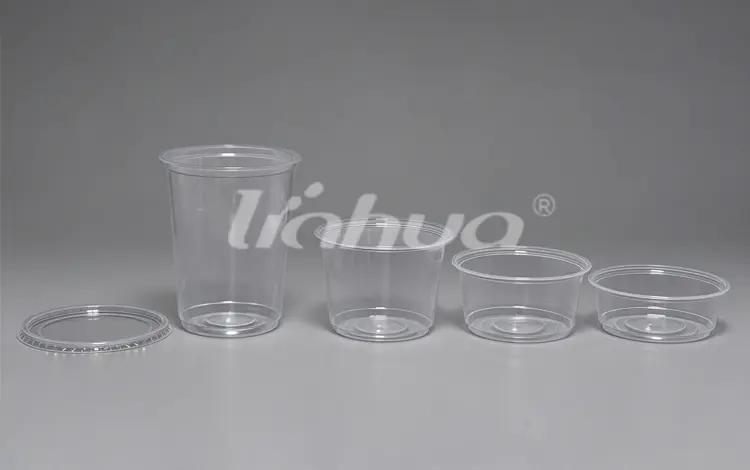 PP and PET Cups, Lids, and Portion PackagingPP portion and deli cups plus PET beverage cups with lids suit cold beverage and deli uses; confirm grade meets fill temperature and crush load.View Product →
Cold beverage cups, portion cups, deli cups and their lids are the strongest fits. A published cup range may include 10oz to 16oz drinking cups, portion cups, airline cups and flat or arch lids; the useful question is whether the exact grade survives the filling temperature and the crush load in the distribution case.
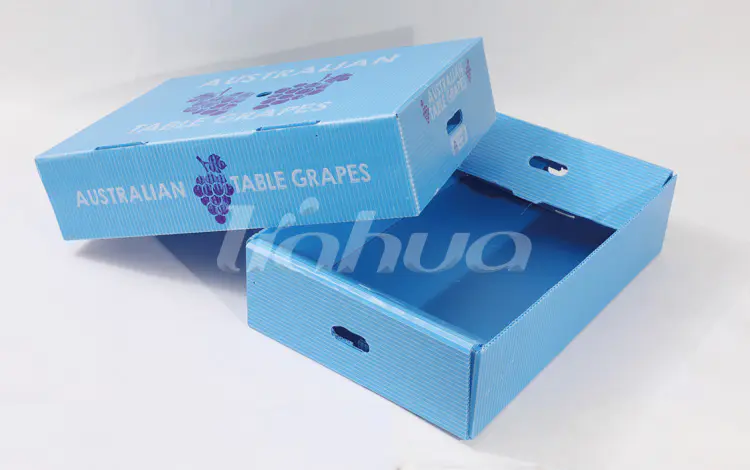 Plastic Food Transport and Produce BoxesBrowse grape, broccoli, logistics, and Tmall food boxes for transport and storage; check specifications and trial moisture, stack load, and condensation for produce.View Product →
For produce, PLA boxes can replace PET in dry or breathable displays, but moisture, stack load and condensation need a trial. Grape boxes and broccoli boxes are not automatically compatible just because the resin is plant-based.
Most failed PLA projects fail at three points: heat, impact and time. A hot-filling line can soften the rim. A freezer drop can crack a brittle grade. A twelve-month ambient shelf life can expose the barrier gap.
Barrier performance is conditional. PLA offers useful aroma protection but not the oxygen barrier of EVOH or the moisture resistance of PP. For meat, ready meals or long shelf life, a monolayer PLA tray is usually the wrong tool. The material guide on corn-starch bioplastic fit frames this as a functional question, not a marketing one.
A lower resin price is not a lower total cost if the line slows down, lids leak or the compost claim cannot be supported at the destination.
| Material | Practical heat range | Barrier and durability | End-of-life claim | Best-fit packaging |
|---|---|---|---|---|
| PLA | Cold to warm; avoid hot-fill near 55°C | Rigid and clear; moderate oxygen barrier; limited moisture barrier | Industrial compost certified grades only | Cold cups, deli containers, dry produce boxes, short-life service |
| PET | Cold and ambient; not ovenable | Good clarity and toughness; good moisture barrier | Recyclable where collection exists | Cold beverages, salad bowls, retail trays |
| PP | Hot-fill and microwaveable grades | Tough; good moisture barrier; moderate oxygen barrier | Recyclable where collection exists | Hot food, lids, deli cups, microwave bowls |
| CPET | Ovenable short-term; high heat tolerance | Rigid; good dimensional stability; not a high-oxygen barrier | Not compostable; rigid PET recovery stream | Ready meals, oven-reheat trays, airline catering |
The table is a screening tool, not a specification. Wall thickness, lid film, sealing temperature and food chemistry can change the result in a single trial run.
Industrial compostability is not a property of the cup alone. EN 13432 and ASTM D6400 require degradation, ecotoxicity and heavy-metal tests under controlled conditions. A PLA cup that meets those standards will not necessarily break down in a home heap, a landfill or a cold marine environment. The claim must match the collection stream.
Ask three questions: where will the packaging be collected, what facility will accept it and what contamination limit applies. If the city or customer has no industrial composting, PLA’s end-of-life advantage narrows to feedstock and energy recovery. Converter documentation should include food-contact declarations and audit evidence; the supplier’s certification and audit records support the review, but a project-specific certificate for the resin grade still matters.
The purchasing decision should be made on total system fit. Use the following checklist before a trial order:
 Food Packaging Solutions: MAP, VSP, and TraysExplore MAP and VSP trays, PP ready-meal packs, moisture-retention trays, PET containers, and high-barrier lidding film for integrated food packaging projects.View Product →
Where a project combines cups, trays, lids or barrier film, a food packaging solutions range can shorten the development loop.
The pilot trial should run at production speed and measure leak rate, top-load, drop, lid fit and seal integrity, not only appearance.
Corn into plastic is commercially real, but it is not a universal upgrade. Use PLA for cold cups, deli containers, dry produce boxes and short-life food service where industrial composting exists or feedstock matters. Choose PET, PP, CPET or EVOH barrier structures when heat, oxygen, moisture or long shelf life dominate. The strongest specification names the job first, then the material, not the other way around.
For packaging teams, the practical win is not a slogan on the lid. It is a validated part that survives the line, protects the food and makes an honest end-of-life claim in the market where it is sold.
Corn Into Plastic: The Practical Case for PLA in Food Packaging Polylactic acid can turn field corn...
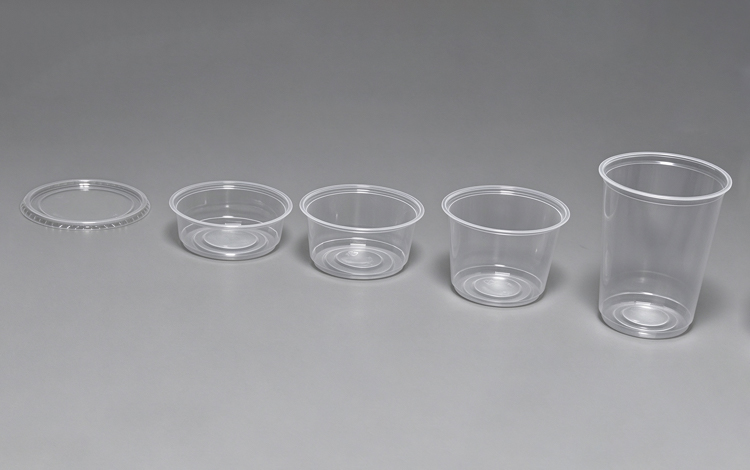
Packaging materials / cup systems PLA Cups Work Only When the Whole Packaging Line Works Polylacti...

0086 574 87739122
Copyright © Ningbo Linhua Plastic Co.,Ltd. All Rights Reserved.
Disposable Food Packaging Tray Manufacturers


Post Comment