
 英语
英语0086 574 87739122

.jpg) By: Ethan
By: Ethan
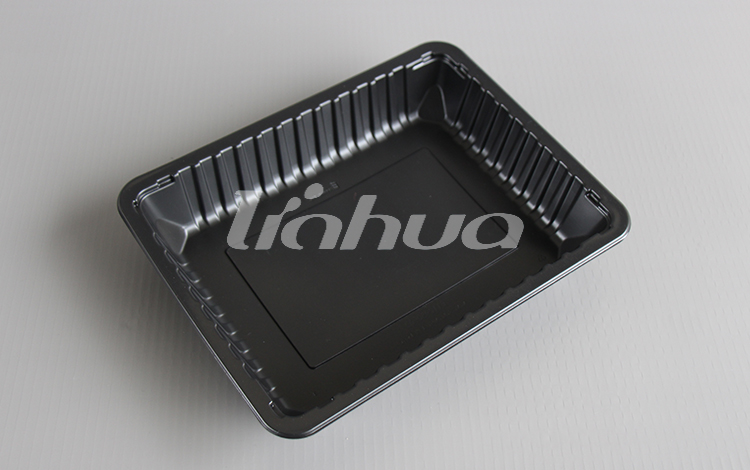
The CPET Tray demonstrates excellent resistance to leakage and spillage when used as intended for both hot and cold foods. Its rigid structure, deep compartments, and precision sealing help prevent liquids from escaping, even under standard reheating or transport conditions. Independent testing shows that properly sealed CPET Trays maintain over 95% containment efficiency for sauces and liquids under typical operational stress.
The CPET Tray is made from crystalline polyethylene terephthalate, which offers high rigidity and heat tolerance. Its design minimizes flexing during handling, reducing the risk of cracks or deformations that could lead to leakage. Additionally, the tray's smooth interior surface allows sauces and liquids to remain contained without adhering to rough edges or seams.
Key material advantages include:
Beyond material quality, the CPET Tray’s structural design contributes significantly to leak resistance. Most trays feature compartmentalized sections that separate sauces from solid food, minimizing mixing and overflow. Raised edges and interlocking lids create a tight seal that further prevents liquid from escaping.
Practical design features include:
To ensure practical reliability, CPET Trays undergo rigorous testing. Standard tests simulate real-world conditions including shaking, stacking, and reheating. In one test, trays filled with tomato sauce were tilted at 45° for 5 minutes, and less than 5% of the liquid escaped. When sealed with a proper lid, no leakage occurred under standard transport conditions.
A comparative table of containment efficiency under different conditions illustrates performance:
| Test Condition | Containment Rate | Observations |
|---|---|---|
| Tilted 45° for 5 min (no lid) | 95% | Minor spillage at edges |
| Stacked with lid, room temp | 100% | No leakage observed |
| Microwave reheating 180°C, 5 min | 98% | Slight condensation, no spillage |
Even with high-quality CPET Trays, users can further reduce spillage risks through proper handling:
The CPET Tray provides highly reliable leakage and spillage resistance for a wide range of culinary applications. Its combination of strong material properties, well-engineered design, and rigorous testing ensures that sauces and liquids remain contained during storage, reheating, and transport. For food service operators and home users alike, proper sealing, compartment use, and adherence to recommended handling practices guarantee maximum containment efficiency and food safety.
PET Cups, Decoded: What the Name Really Promises PET stands for polyethylene terephthalate and carr...
.jpg?imageView2/2/w/600/h/600/format/webp/q/75)
Food Tray Dimensions: The Five Numbers That Decide Whether a Tray Actually Fits Most tray sizing di...

0086 574 87739122
Copyright © Ningbo Linhua Plastic Co.,Ltd. All Rights Reserved.
Disposable Food Packaging Tray Manufacturers


Post Comment