
 英语
0086 574 87739122

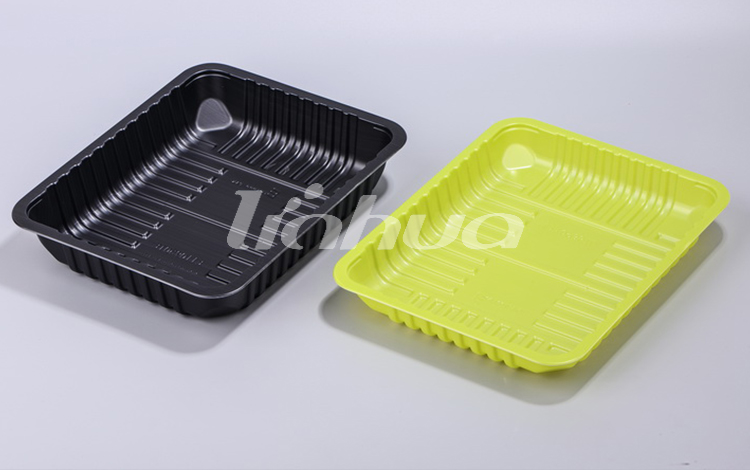 By: Ethan
Two forks sit on a stainless bench. One is polypropylene, one is CPLA. Both go into a sealed ready-meal tray held at 88°C for forty minutes. The polypropylene fork softens under load and springs back when it is lifted out. The CPLA fork comes out dead straight, holds its shape against the bowl edge, and then loses a tine when the tester bends it at 4°C, straight from the cold room.
That pair of results is the whole argument. CPLA cutlery is the right purchase for hot, greasy, single-use meals that need a stiff utensil and a certified industrial composting route behind it. It is the wrong purchase wherever the brief quietly includes dishwashing, freezer handling, backyard composting, or a price that has to match polypropylene. Three facts decide which case you are in: the heat ceiling of the specific grade, the scope of the certificate you are relying on, and whether the rest of the meal kit is compostable too.
Polylactic acid is a polyester built from lactic acid. In its common amorphous form its glass transition sits around 55 to 60°C, which is why a plain PLA fork goes floppy in a hot sauce and why early compostable cutlery earned a reputation for bending before it broke.
CPLA is the same polymer taken through a crystallisation step, usually blended with a mineral filler such as talc or calcium carbonate. Crystallinity lifts the heat deflection temperature into roughly the 85 to 95°C band and raises stiffness at the same time. In the hand the result feels dense and faintly ceramic, which is part of why it reads as premium on a catering table.
Two consequences follow the data sheet rather than the sales sheet. Density is the first: CPLA sits around 1.25 to 1.35 g/cm3 against about 0.90 for polypropylene, so a fork of identical dimensions weighs roughly 40 percent more. On a low-value, high-volume item, freight and volumetric weight can cost more than the resin upgrade itself. Brittleness is the second: CPLA is stiff but not tough, and its notched impact strength falls further as temperature drops. Frozen-dessert spoons and cold-chain catering forks are where the complaint reports usually originate.
A claim of heat resistance to 100°C on a CPLA cutlery datasheet should be read as a short-term deflection figure, not a working limit. What a filling line cares about is temperature, dwell time, load and food chemistry at once. Practical experience puts the comfortable band at about 85°C for contact measured in minutes under light load, with permanent bowing appearing above 60°C during long hot-hold conditions. Fatty and acidic foods accelerate the effect, and a sealed tray keeps steam against the handle for the entire journey.
| Material | Working heat ceiling | Handling behaviour | End-of-life route | Typical fit |
|---|---|---|---|---|
| CPLA | About 85°C in short contact; long holds above 60°C cause creep | Stiff, low impact strength, tines snap when cold | Industrial composting, certified grades only | Hot ready meals, catering, premium single-use |
| Polypropylene | About 100 to 120°C, tolerant of microwave reheating | Tough, flexes instead of snapping, heavier feel | Recycling where a PP stream exists | General takeaway, soups, heavy-duty service |
| Amorphous PLA | About 50 to 55°C before softening | Rigid when cold, loses shape quickly in heat | Industrial composting | Cold desserts, salads, short-serve items |
| Polystyrene | About 70 to 80°C | Very stiff and brittle, cracks under point load | Largely landfilled in most markets | Cold applications only |
| Birch wood | Scorches on contact, no melt point | Splinters, absorbs sauces, changes flavour | Compostable or landfill depending on coating | Eco positioning, low-moisture menus |
Read across the table and the trade is visible: CPLA buys heat range over plain PLA and compostability over polypropylene, and gives away toughness, weight and price. It also explains a common procurement error, which is specifying CPLA for a cold application where its advantage disappears and only its cost remains.
EN 13432, ASTM D6400, AS 4736 and the ISO equivalents test the same four ideas: disintegration of at least 90 percent within twelve weeks, biodegradation of at least 90 percent within six months, no adverse effect on the resulting compost, and restricted heavy metals. All of it happens under industrial conditions near 55 to 60°C with controlled moisture, not on a garden heap.
That distinction is commercial rather than academic. In markets without an industrial composting stream, CPLA cutlery reaches landfill or incineration and behaves like any other durable plastic, only with a stronger story attached. The pack claim therefore has to say industrially compostable and name the route, and it has to survive advertising scrutiny in the EU and in states such as California, where unqualified compostability wording is actively challenged.
A compostable claim is not a property of the fork. It is a promise about the infrastructure the fork is going to meet.
Cutlery is rarely bought alone. It travels inside a kit with a tray, a lid, one or two sauce cups, a napkin and a sachet, and when a single component changes material, every other component is judged against it.
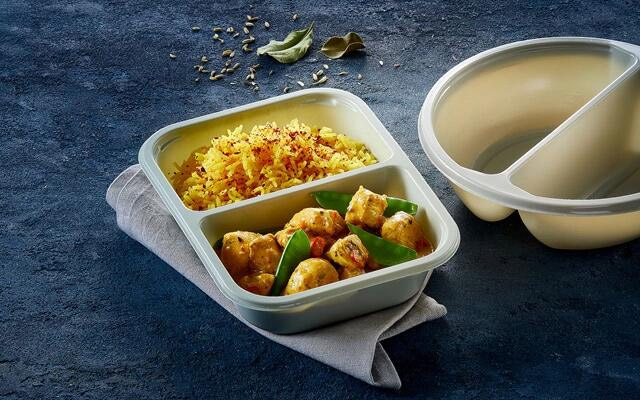 Custom PP Ready Meal Packaging for Freezer-to-Microwave UseReview this PP ready meal packaging when tray, lid and cutlery fit must be checked before ordering.View Product →
A ready-meal tray with a cutlery pocket carries a cavity tolerance of a millimetre or two. A handle that is 2 mm thicker either drops in or it does not, and the cost of discovering that at the filling line is a tooling change. Matching the cavity drawing against the handle section, the stack height of nested sets, and the force needed to push the kit past a sleeve are all cheap checks when they are done before the order.
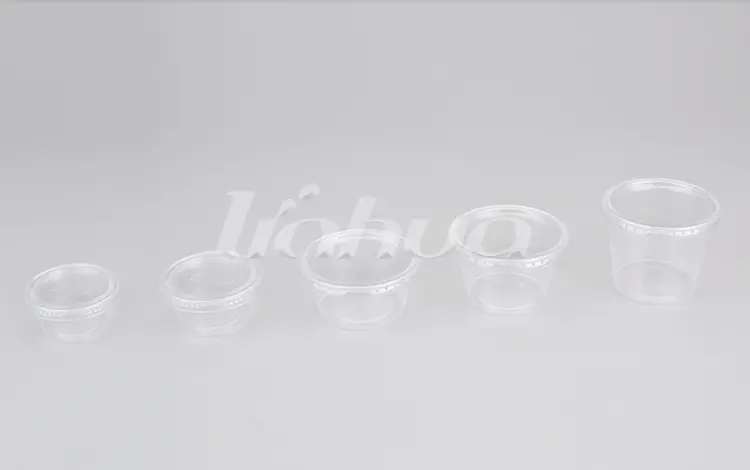 PP Transparent Portion Cups for Sauces and CondimentsCheck these transparent PP portion cups for sauce separation, lid compatibility and stable stacking in ready-meal kits.View Product →
Sauce cups follow the same rules. A 1 to 2 oz portion cup has to seal against its lid under the weight of the kit, resist the oil in a dressing, and stack without wedging. Where the cutlery is compostable and the cup is polypropylene, the kit stops being compostable at the point of use, which is precisely where the customer notices.
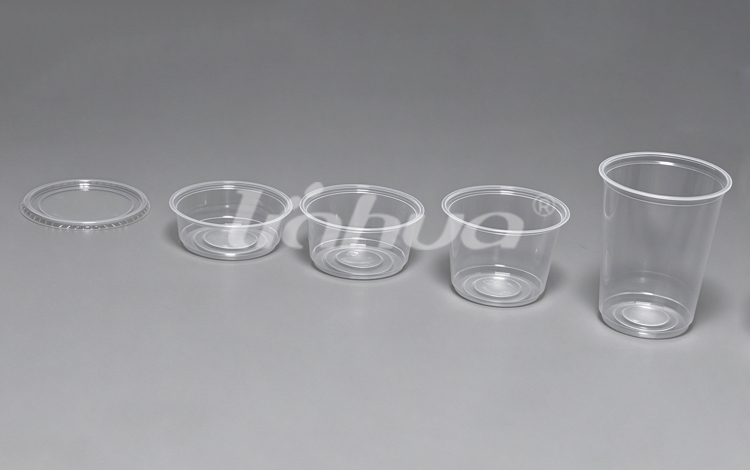 Clear PP Deli Cups in 8, 12, 16 and 32 ozView these clear PP deli cups for salads, fruit, dips and prepared foods when sourcing trays, cups and lids from one packaging supplier.View Product →
This is where a packaging manufacturer's own scope becomes useful. Ningbo Linhua Plastic, which states more than two decades in food-contact packaging from its site in Ningbo, produces CPET, EVOH barrier, moisture-retention and turned-edge trays, PP and PET cups, plus flat and arch-form lids; its published certification profile lists ISO 9001, HACCP, BRC and AIB-aligned GMP practices. Buying trays, cups and lids from one qualified source does not solve the cutlery question, but it keeps the fit, the sealing surface and the compliance paperwork inside one conversation.
The material behaviour of CPLA itself is set out in more detail in Linhua's notes on CPLA heat resistance and sourcing, which are worth reading next to the resin datasheet rather than instead of it.
Most disputes on compostable cutlery are not about the material being wrong. They are about a specification that never named what the material had to do. A workable approval sequence looks like this.
Price per piece is the wrong unit of comparison. CPLA typically quotes at 1.5 to 2.5 times the polypropylene equivalent before freight, and the density penalty plus a scrap rate that rises with brittle tines widens that gap. Compare cost per delivered set, then compare it again after the warp trial.
The short version: CPLA is a good material with a narrow job. It wins on hot, greasy, single-use meals where rigidity matters, the composting route genuinely exists, and the certificate names the exact product. It loses wherever the specification quietly assumes toughness, dishwashing, backyard decomposition or a polypropylene price, and no amount of supplier confidence changes the physics of a crystallised polyester at 4°C.
Specify the whole kit, test at both ends of the temperature range, and keep the disposal route in writing. That is a shorter list than it sounds, and it is the difference between a compostable claim that holds and one that becomes a recall note.
Materials and procurement CPLA Cutlery, Judged by the Fork That Breaks Compostable cutlery is easy ...
Corn Into Plastic: The Practical Case for PLA in Food Packaging Polylactic acid can turn field corn...

0086 574 87739122
Copyright © Ningbo Linhua Plastic Co.,Ltd. All Rights Reserved.
Disposable Food Packaging Tray Manufacturers


Post Comment