
 英语
英语0086 574 87739122

 By: Ethan
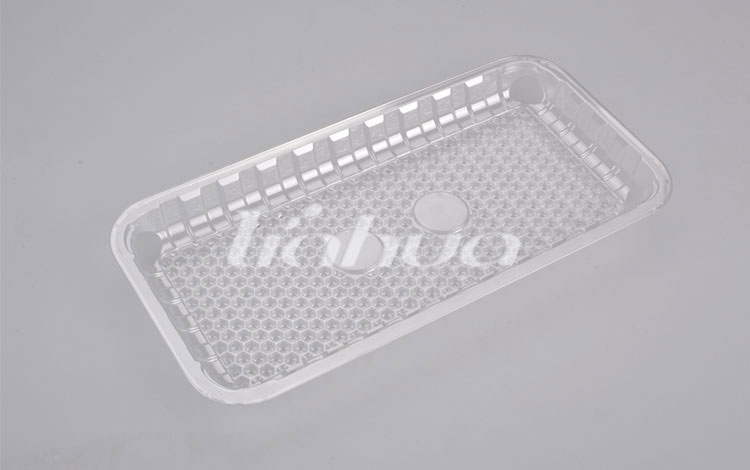
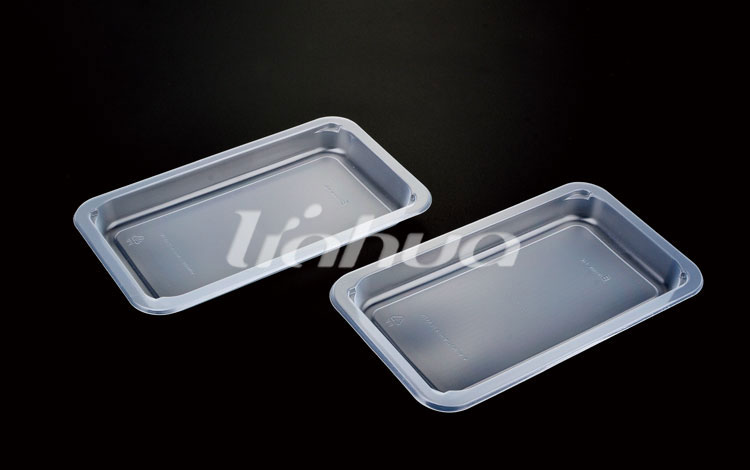
Plastic Food Tray made from multi-layer barrier materials is significantly more effective at preventing freezer burn than a single-layer PP tray. The difference lies in the material's ability to block oxygen and moisture vapor transmission, both of which are the primary drivers of freezer burn. While a single-layer PP tray offers basic rigidity and cost efficiency, it falls short when it comes to long-term frozen food preservation, especially for products stored beyond 30 days.
Freezer burn occurs when moisture inside frozen food sublimates — converting directly from ice to vapor — and escapes through the packaging. Simultaneously, ambient oxygen can permeate packaging walls and cause surface oxidation, resulting in discoloration, off-flavors, and a dry, leathery texture. Two key metrics determine how well a Plastic Food Tray resists these processes:
The lower these values, the better the tray protects frozen food from quality degradation. This is where multi-layer barrier trays outperform their single-layer PP counterparts by a wide margin.
A single-layer PP (polypropylene) Plastic Food Tray is one of the most widely used packaging formats in the food industry. It is lightweight, chemically resistant, FDA-approved for food contact, and can withstand temperatures from -20°C to 120°C, making it suitable for both freezing and microwaving.
However, PP on its own is not a strong barrier material. Typical performance metrics for a standard single-layer PP tray (0.5–1.0mm thick) include:
For products frozen for fewer than 30 days and sold with a sealed lidding film, a PP tray may perform adequately. But for frozen meals, seafood, or meat products requiring 3–12 months of shelf life, a single-layer PP Plastic Food Tray is generally insufficient on its own.
A multi-layer barrier Plastic Food Tray is constructed from multiple co-extruded or laminated layers, each serving a specific function. A common structure used in frozen food packaging looks like this:
EVOH (Ethylene Vinyl Alcohol) is the critical component. Its OTR can be as low as 0.01–0.5 cc/m²/day — up to 10,000 times lower than standard PP. Even when combined in a multi-layer structure, the composite tray typically achieves an OTR of 1–5 cc/m²/day, far superior to single-layer PP.
The table below summarizes the key differences between these two tray types across the most important performance categories for frozen food applications:
| Performance Factor | Single-Layer PP Tray | Multi-Layer Barrier Tray (PP/EVOH/PP) |
|---|---|---|
| OTR (cc/m²/day) | 150–300 | 1–5 |
| WVTR (g/m²/day) | 5–10 | 1–3 |
| Freezer Burn Protection | Low–Moderate | High |
| Recommended Frozen Shelf Life | Up to 1–2 months | 6–18 months |
| Microwave Safe | Yes (PP layer) | Yes (depends on structure) |
| Recyclability | High (mono-material) | Low (mixed layers) |
| Material Cost | Low | 20–50% higher |
Not every frozen food product requires a multi-layer barrier Plastic Food Tray. The decision should be based on the product type, intended shelf life, and distribution conditions. Here are practical scenarios:
For example, a frozen salmon fillet stored in a single-layer PP Plastic Food Tray may show visible freezer burn, color fading, and off-odors within 6–8 weeks. The same product in a PP/EVOH/PP multi-layer tray under identical conditions can maintain acceptable quality for up to 12 months.
One significant drawback of a multi-layer barrier Plastic Food Tray is its environmental profile. Because the tray is composed of incompatible polymers bonded together, it cannot be easily separated for recycling in most standard municipal recycling streams. A PP/EVOH/PP tray is typically classified as a mixed-material item and directed to landfill or incineration.
In contrast, a single-layer PP Plastic Food Tray is a mono-material product with a recycling code of #5 (PP), accepted by a growing number of curbside programs. This makes it a more sustainable choice when barrier performance requirements allow it.
The industry is currently developing next-generation solutions to bridge this gap, including:
When selecting between a single-layer PP and a multi-layer barrier Plastic Food Tray, use the following decision framework:
The data is clear: a multi-layer barrier Plastic Food Tray provides substantially better protection against freezer burn than a single-layer PP tray, offering OTR values up to 60 times lower and enabling frozen shelf lives of 6–18 months versus the 1–2 months typical of PP-only trays. For high-value or long shelf-life frozen products, the investment in multi-layer barrier technology is justified both technically and commercially. However, for short-cycle, eco-conscious applications, a single-layer PP Plastic Food Tray paired with a quality lidding film remains a practical and more sustainable solution.
Food-service packaging · Buyer's guide Small Containers, Big Stakes: Choosing Little Sauce Containe...
Beverage Packaging · Buyer's Field Note Eco Friendly Cups for Cold Drinks: What Buyers Should Actua...

0086 574 87739122
Copyright © Ningbo Linhua Plastic Co.,Ltd. All Rights Reserved.
Disposable Food Packaging Tray Manufacturers


Post Comment